Spring 2026
Within ten years of retirement? What you need to think about
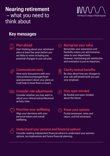
This guide is for clinical radiologists and clinical oncologists who are approaching retirement or starting to think about their next steps.
Member benefits
Publications are reviewed regularly by the Clinical Radiology Professional Support and Standards Board to ensure that they remain relevant and up to date.
Filter By:
This guide is for clinical radiologists and clinical oncologists who are approaching retirement or starting to think about their next steps.
This guidance was developed by an expert panel, including Clinical Oncologists and Clinical Radiologists and incorporates feedback following a public consultation.

Guidance on how to streamline the process of procuring or replacing a picture archiving and communication system (PACS).
Guidance on screening and symptomatic breast imaging, fifth edition replaces the Guidance on screening and symptomatic breast imaging, fourth edition
Standards for the reporting and interpretation of imaging investigations provide a baseline that all radiology reports should achieve, so that the quality and consistency of imaging interpretation can be assured.
We have joined forces with the Society of Radiographers (SoR) to issue joint guidance on the implications for service delivery, patient care, and workforce management in imaging and oncology services.

This guideline seeks to provide a consensus opinion with regard to which patients should be considered for CT scanning (the diagnostic modality of choice) while accepting that this is still an area of considerable controversy and concern.
The purpose of this document is to interpret the NHSX Records management code of practice for health and social care from a radiology digital record perspective, providing guidance to radiology staff, information technology (IT) departments and system vendors on the implications of the Code for radiology record retention and how these might be addressed using digital solutions.

In this document, we define a standard workflow for diagnostic imaging episodes (The “Diagnostic Radiology Life Cycle”) from the point of referral to result delivery by defining and detailing each of the timepoints on the journey of an examination through three key stages: pre-acquisition, image acquisition and post-acquisition.
When determining access to clinical imaging requesting, inconsistencies remain across services. The guidance has been co-developed by the Royal College of Radiologists, the Society and College of Radiographers, the Royal College of Nursing, and NHS England. It is supported by the Chartered Society of Physiotherapy and the Centre for Advancing Practice.
This guidance aims to provide minimum standards for providers to deploy artificial intelligence (AI) solutions in radiology and focuses on the period between the algorithm achieving regulatory approval and its business-as-usual deployment.
Safe use of sedation and analgesia can reduce the burden on healthcare systems by more prudent use of general anaesthesia and inpatient resources.
Head to our services hub to find out about access to iRefer, all our publications, and our section on management and service delivery.